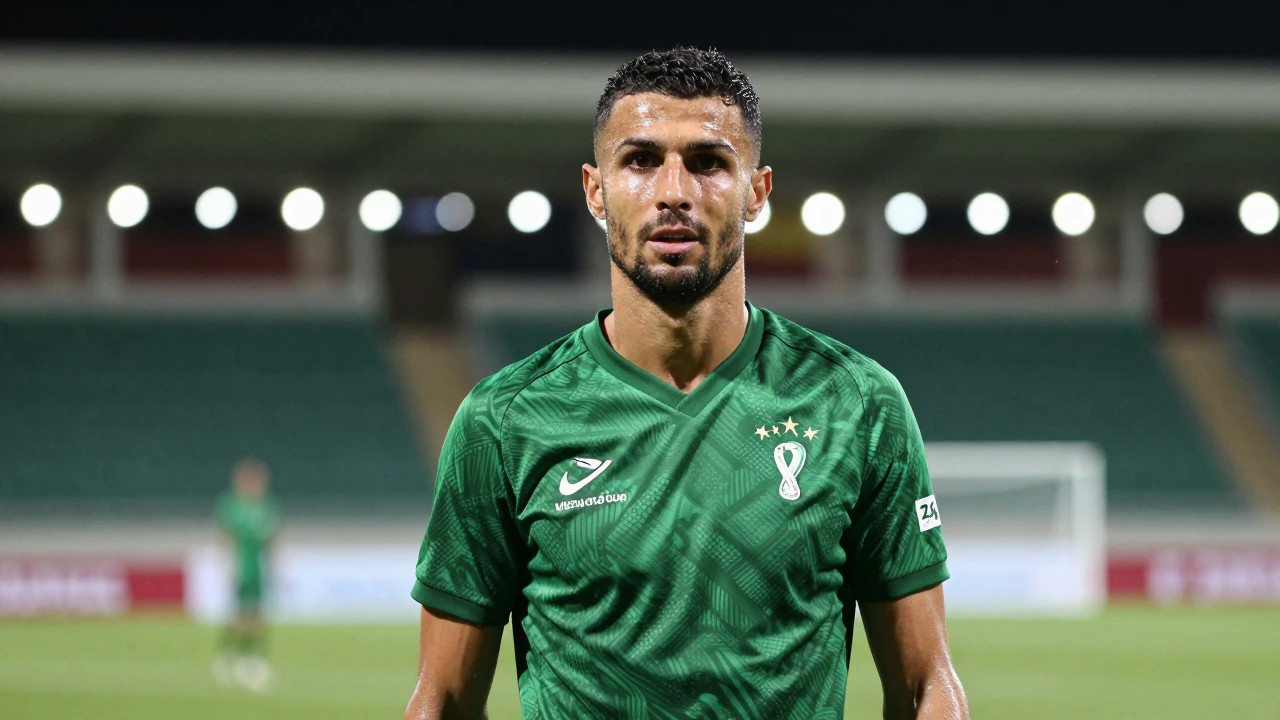

The Saudi Arabia national team faces urgent defensive and attacking crises ahead of the 27th Gulf Cup on home soil. These technical problems, which were clearly exposed during the team's participation in the 2026 World Cup, require swift solutions from coach Georgios Donis.
Preparations for the Gulf tournament come at a critical time, with the team sitting fourth in the group standings for World Cup qualifying, five points behind leaders Spain. The team has scored just one goal and conceded five in three games.
Serious Defensive Problems
The defensive line needs Donis's urgent intervention. At the World Cup, the team suffered from clear problems in defensive organisation, with spaces opening up in front of opponents and difficulties dealing with crosses and movement inside the penalty area. The issue is not solely the defenders' abilities but rather the way the entire line moves, the distances between its parts, and how the team deals with transitions after losing possession.
These details become even more dangerous against Gulf sides that excel at exploiting spaces and playing directly. With changes to the team squad, Donis must build a more cohesive defensive system rather than rely on individual solutions. Any flaw in positioning could bring back the problems from the last global appearance.
Midfield Crisis with Al-Juwayr's Absence
The camp lost important midfielder Musab Al-Juwayr for disciplinary reasons, with Mukhtar Ali called up in his place. The decision may be settled administratively, but its technical impact requires completely different calculations. Al-Juwayr and Ali do not offer the same role.
"Al-Juwayr gave the team something important in midfield." as one report described his role. Replacing him with a single player is difficult, as Mukhtar Ali brings altogether different characteristics.
Donis cannot simply drop Ali into Al-Juwayr's position and expect the same roles. He must distribute the task of linking and creating play between more than one player, while maintaining the team's ability to move in an organised way from midfield to attack.
Attacking Dilemma
The attacking dilemma also surfaced at the World Cup, where the team struggled to create a continuous threat and reach the opponents' goal often enough. This was particularly true when spaces to rely on counter-attacks never appeared.
More varied solutions in the final third are now essential. Relying on individual attempts or waiting for spaces behind the opponent's defence will not be enough, especially against teams that may sit deep and pack their defensive block.
Al-Juwayr's absence stings the attacking problem more, as it does not always start with the forwards. It starts with the quality of the ball that reaches them and the midfield's ability to change the speed of play, thread passes between the lines, and open up the right space.
Donis faces a task that goes far beyond picking a starting line-up. He must reorganise a defence that leaked spaces, replace Al-Juwayr's grip on the rhythm, and find sharper attacking solutions.
Solving these files quickly could see Saudi Arabia enter Gulf 27 looking like a different team. The team plays its next match at home after a recent run of form showing one win, three draws, and one loss in the last five outings.
The report in full is at goal.com